
What Happens at a Comprehensive Hearing Test With an Audiologist
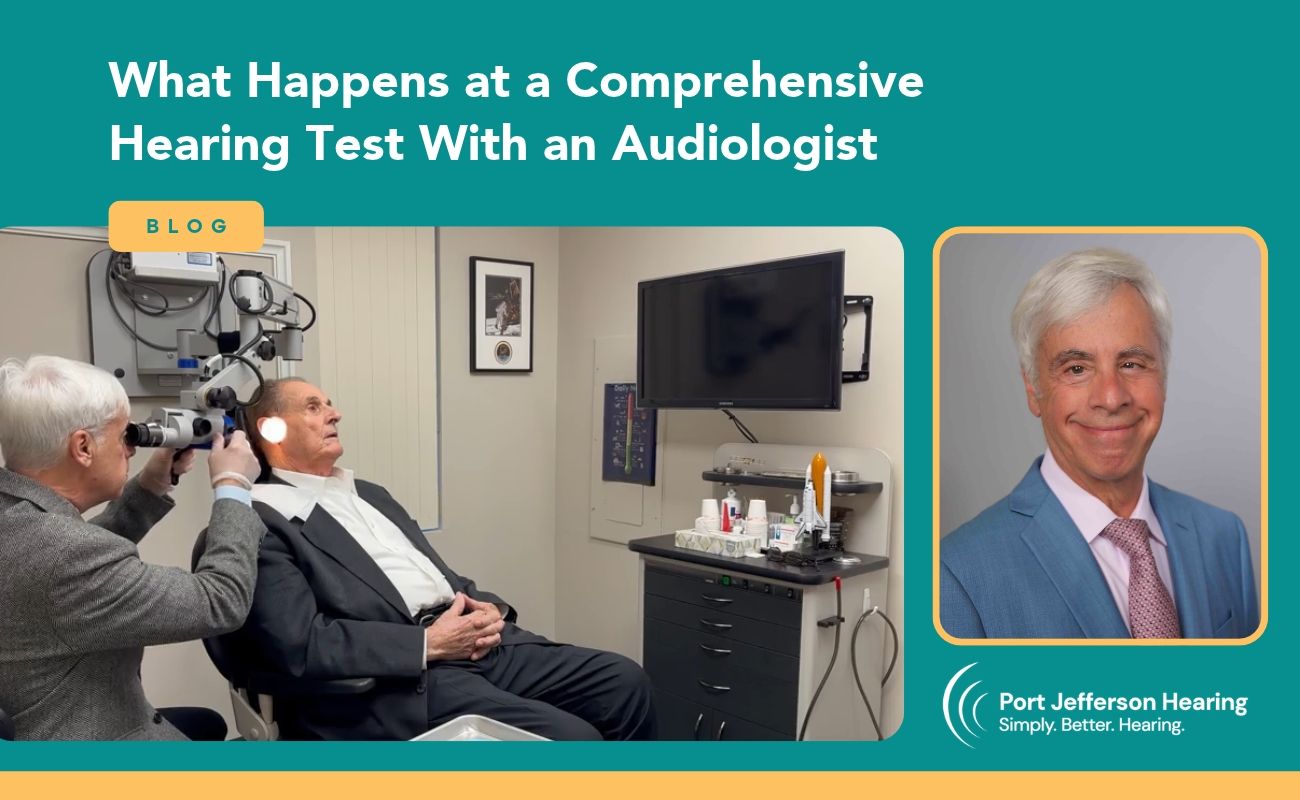
If it has been a few years since your last evaluation, or you've never had one, you may be curious about what happens during a comprehensive hearing test with an audiologist. At Port Jefferson Hearing, Dr. John Martinetti follows a step-by-step series of Best Practice tests, and knowing what each one measures can make your first visit feel familiar.
Starting With Your Story
Every evaluation begins with a conversation. Dr. Martinetti reviews your medical history as it relates to hearing, including factors such as diabetes, high blood pressure, family history, and noise exposure. You'll also complete a standardized Hearing Survey that captures your personal goals, whether that means following the conversation at a family dinner, keeping up in meetings, or hearing your grandchildren more clearly on the phone.
We recommend that adult patients bring a friend or significant other to the first visit. Having someone you trust with you makes it easier to remember the details and talk through your options afterward. For children, we ask parents to bring only the child being evaluated, without siblings, so the parent can stay with their child in the test room.
A Close Look at Your Ears
Before any listening tests, Dr. Martinetti examines your ear canals and eardrums with an illuminated ENT surgical microscope. This step is called otoscopy, and it gives a clear, magnified view of the ear so the tests that follow reflect how you truly hear.
Tone Testing and Your Audiogram
The part most people picture when they think of a hearing test is pure-tone threshold testing. You'll listen to a series of beeps at low, middle, and high pitches and respond each time you hear one, even when the sound is barely there. The goal is to find the softest level you can detect at each pitch.
Your results are plotted on a chart called an audiogram, with red circles marking your right ear and blue Xs marking your left. The pattern shows the degree of any hearing loss, which is described as mild, moderate, severe, or profound.
Threshold testing is only one piece of the picture, since hearing also involves processing, auditory skills, and cognitive ability. That's why the evaluation continues well beyond the beeps.
Word Recognition Testing
One of the most common concerns we hear is "I can hear people talking, but the words aren't clear." Word recognition testing measures exactly that. Best practice calls for recorded, standardized word lists, so every word is presented the same way each time. You'll repeat back each word you hear.
The words are delivered at your Most Comfortable Listening Level (MCL), which is set using research-verified test levels along with your own sense of what feels comfortable. This shows how clearly you understand speech when volume is not the limiting factor.
Speech-in-Noise Testing
Difficulty understanding speech in background noise is the most troubling complaint for nearly every patient, and we consider speech-in-noise testing the most important test in the evaluation. Dr. Martinetti uses the QuickSIN test, with modifications, to measure how well you follow sentences when competing chatter is present. He may add other speech-in-noise tests to get a fuller sense of how you hear and process words and sentences in noisy settings like restaurants and family gatherings.
Understanding Your Results and Next Steps
Once testing is complete, Dr. Martinetti patiently walks you through your hearing profile in plain language. The combined results show the type and extent of any hearing loss, including whether it may call for further medical attention. For children, who often have temporary hearing loss that can be treated, he sends a comprehensive report to the child's pediatrician.
When hearing aids are a good fit, your recommendations are built around your test results and your lifestyle needs. We also offer hearing aid trials with no financial obligation, so you can experience the benefits in your everyday routine before making a decision. If your hearing is within normal limits, your results become a helpful baseline for future visits.
Schedule a Hearing Test With a Port Jefferson Audiologist
Port Jefferson Hearing has cared for Long Island families since 1984. Dr. Martinetti is board certified in audiology, a Fellow of the American Academy of Audiology, and holds Certificates of Clinical Competence in both audiology and speech-language pathology, with more than 30 years of experience working with children as well as adults.
Call us at 631-331-1888 to schedule your comprehensive hearing test at our office in Davis Professional Park, 5225 Nesconset Hwy, Building #3, Suite #10, in Port Jefferson Station.
Discover Our Latest Blogs
Stay informed with our insightful blog posts.
What Happens at a Comprehensive Hearing Test With an Audiologist
An Audiologist's Take on Oticon Reveal
5 Questions Port Jefferson Patients Ask About Tinnitus

Hearing Aid Trials With No Financial Obligation
At Port Jefferson Hearing we believe the only way to know which hearing aid is right for you is to experience the benefits in your day-to-day life. That is why we created a hassle-free, no pressure process that truly puts you in the drivers seat.
