
Hearing Aids vs. OTC Devices — What the Research Says
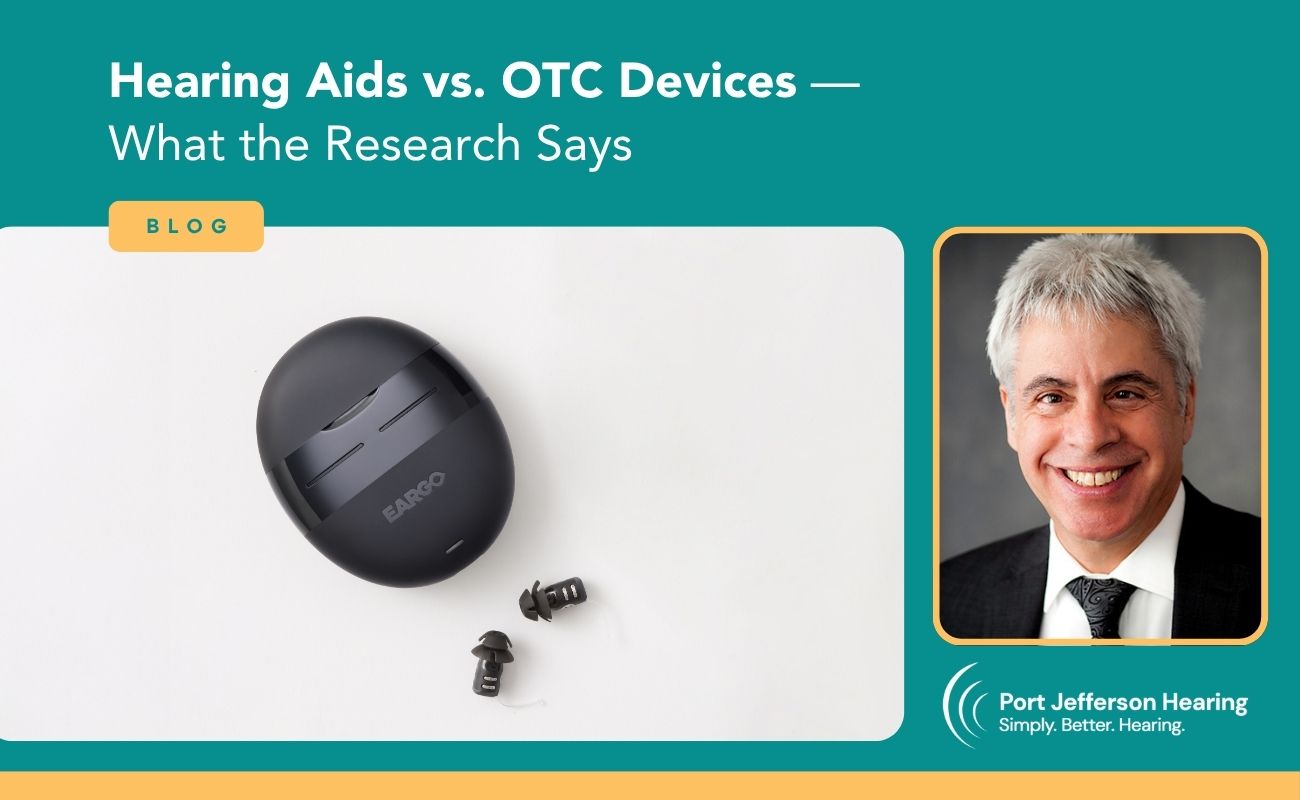
Over-the-counter hearing devices have been a big deal since the FDA opened up the market in 2022. More options, lower prices, no doctor's appointment needed — it's easy to see the appeal. But patients ask us all the time: are these things actually as effective as prescription hearing aids? The honest answer is that it depends (but usually not), and the research tells an interesting story.
What OTC Devices Are Actually Built For
OTC hearing devices are designed for adults with mild to moderate hearing loss. You self-fit them based on your own preferences — no audiologist, no hearing test. You can pick them up at a pharmacy or order them online, often for a fraction of the cost of a prescription device.
For someone with a genuinely mild, uncomplicated hearing loss who can't access professional care, they're better than nothing. That qualifier matters more than it might seem, though.
Why the Research Is More Complicated Than the Headlines
A widely cited study in JAMA found that self-fit OTC devices performed comparably to professionally fit ones for adults with mild to moderate hearing loss. That got a lot of attention.
What didn't: participants were carefully screened before the study, tested under controlled conditions, and still had professional supervision throughout.
That's not how it works when you buy something off a shelf.
In the real world, many people buying OTC devices have hearing loss that falls outside the mild-to-moderate range — and don't know it. Most people underestimate how much they've lost. And different types of hearing loss (the kind affecting your nerve vs. the kind affecting your ear's mechanics) need very different solutions. A self-fit device can't sort that out for you.
A 2023 review in Ear and Hearing confirmed that while OTC devices showed real promise for a specific group of users, outcomes dropped significantly without any professional guidance. Return rates are high. Satisfaction tends to be lower than expected.
How Prescription Hearing Aids Work Differently
Prescription hearing aids are programmed to *your* hearing profile — not a generic preset built for a broad range of people. It starts with a full hearing evaluation that measures how you hear across different frequencies and how well you understand speech, both in quiet and in noisy environments.
From there, the programming is matched precisely to your results. At Port Jefferson Hearing, we also use real-world speech testing to fine-tune amplification levels so your aids are doing what your hearing actually needs. The devices we fit — including Signia IX, ReSound Vivia, and Oticon Intent — use AI-driven sound processing that adapts in real time depending on where you are and what you're listening to.
Then there's follow-up care, which isn't just a formality. Subtle adjustments over the first weeks and months make a real difference in how well hearing aids perform long-term.
The Noise Problem Most People Don't Expect
Ask anyone with hearing loss what frustrates them most, and you'll almost always hear the same answer: understanding people in noisy places. Restaurants, family gatherings, crowded offices — it's where hearing loss hits hardest.
It's also where most OTC devices fall short. Without calibration to your specific loss pattern, they tend to amplify everything — background noise included — rather than isolating and clarifying speech. The result is often louder noise rather than clearer conversation.
Prescription devices from brands like ReSound and Signia use deep neural network technology trained specifically on speech in noise. ReSound Vivia's processor runs 4.9 trillion operations per day to separate speech from background sound. Signia IX tracks multiple speakers at once in real time. These aren't minor upgrades over a basic amplifier — they're fundamentally different tools.
What to Do Before You Buy Anything
OTC devices are a genuine step forward for accessibility, and more people paying attention to their hearing is a good thing. But "accessible" and "the right choice for you" aren't the same thing. Before you spend money on any hearing device — OTC or prescription — a professional evaluation tells you what you're actually dealing with. You might have mild loss that an OTC device could help with. You might have something that needs more targeted care. You won't know until you get tested.
At Port Jefferson Hearing, Dr. John Martinetti has been providing comprehensive hearing care since 1984. We take the time to understand your hearing, your lifestyle, and what you're struggling with most before recommending anything. If you're weighing your options or just want to understand your hearing better, give us a call at 631-331-1888. We're glad to help you figure out what's actually right for you.
Discover Our Latest Blogs
Stay informed with our insightful blog posts.
Why Your Child's Hearing Belongs on the Back-to-School Checklist
Hearing Loss at Work: Your Rights Under New York Law

How to Spot Hearing Aid Scams

Hearing Aid Trials With No Financial Obligation
At Port Jefferson Hearing we believe the only way to know which hearing aid is right for you is to experience the benefits in your day-to-day life. That is why we created a hassle-free, no pressure process that truly puts you in the drivers seat.
