
An Audiologist's Take on AI Hearing Aids
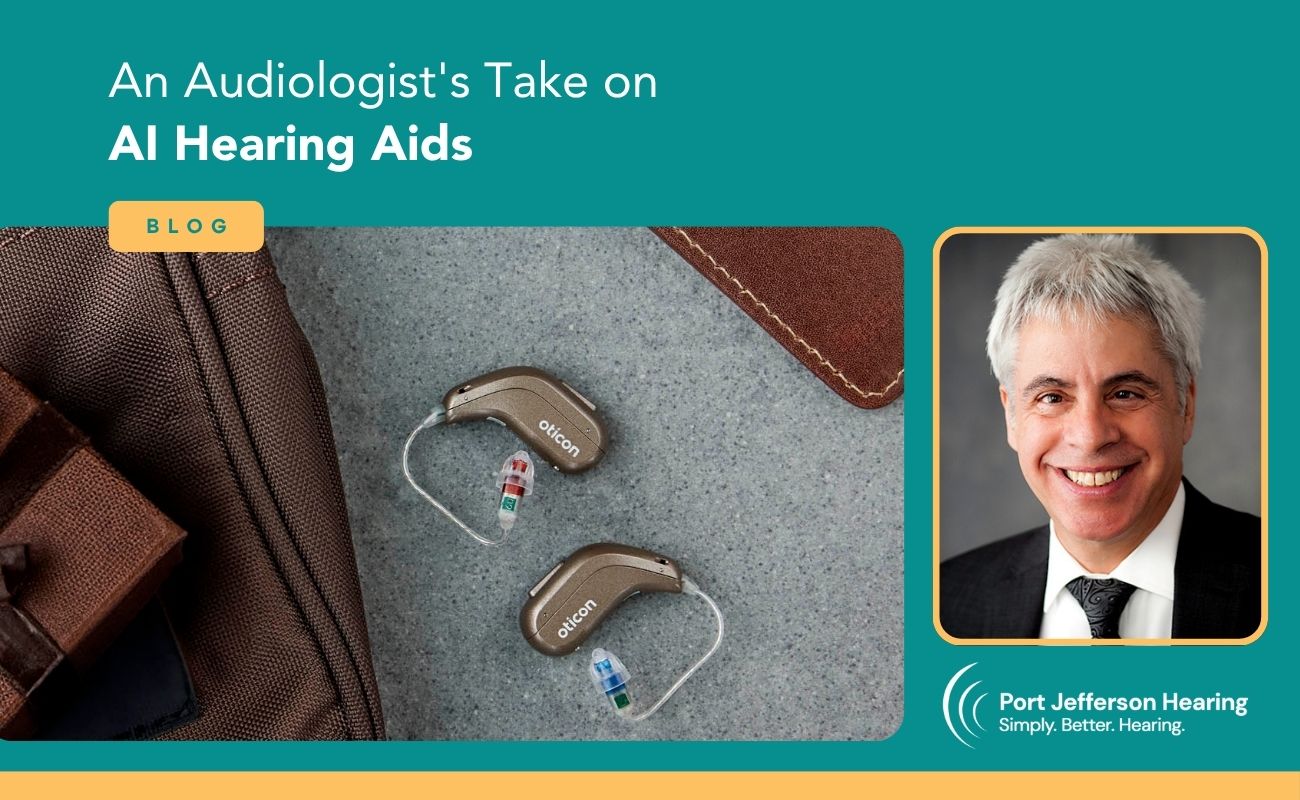
There's a lot of noise around AI hearing aids right now — and most of it isn't helping you make a better decision. So here's a straightforward look at what the technology actually does, where it makes a real difference, and why the fitting still matters just as much as the device.
How AI Works Inside a Hearing Aid
When a manufacturer says their hearing aid uses AI, they're typically talking about a deep neural network — a processing system trained on millions of real-world sounds. It's not a robot making decisions. Think of it more like a highly trained assistant that's spent years learning the difference between speech, background noise, music, and everything else your ears encounter in a day.
The ReSound Vivia, for example, was trained on 13.5 million spoken sentences. Its onboard chip runs nearly 5 trillion operations daily, all aimed at one goal: make speech clearer without stripping the sound of its natural quality. Oticon takes a different approach with their Zeal and Intent models. Rather than deciding what you should hear, their technology gives your brain access to the full sound environment and lets your auditory system do what it naturally does best.
Two different philosophies, both genuinely sophisticated — and both a real step forward from what was available even five years ago.
Where You'll Actually Notice the Difference
Noisy environments have always been the hardest problem in hearing care. Restaurants, family dinners, meetings — these are the situations where older hearing aids often fell short. Traditional noise reduction was blunt. It cut certain frequencies and sometimes helped, sometimes made things worse.
AI-driven processing is more precise. The Vivia's Intelligent Focus prioritizes sound based on where you're looking. Oticon's Intent uses sensors that track your movement, your conversation activity, and the acoustic environment simultaneously, then adjusts support in real time. These aren't just marketing features. Patients who've struggled for years in noisy settings often notice a genuine improvement — not perfect, but meaningfully better.
Battery life has improved too. The Vivia delivers up to 30 hours per charge. The Oticon Zeal — a compact in-the-ear model — offers up to 20 hours. Most devices now support quick charging, giving you several hours of use from a 15–30 minute top-up.
What the Technology Still Can't Fix
This part doesn't usually make it into the brochures, but it's important.
AI improves what a hearing aid does with sound. It can't fix a poor fitting. If your device isn't programmed to match your specific hearing loss — if it's amplifying too much in some frequencies and not enough in others — the AI has nothing to work with. You'll still struggle, just with a more expensive device.
That's why real ear measurement is a core part of every fitting at Port Jefferson Hearing. We use probe microphone measurements to verify that what the hearing aid delivers at your eardrum actually matches what your hearing loss requires. It's objective, it catches problems that would otherwise go unnoticed, and it's the difference between a device that performs and one that just sits in a drawer.
The AI in today's hearing aids is genuinely impressive. But it works best when it starts with a fitting done right.
The Hearing Aids We're Fitting Right Now
At Port Jefferson Hearing, we're currently fitting the Signia Pure Charge&Go IX, the Oticon Intent and Zeal, and the ReSound Vivia. Each one takes a different approach to AI processing, and each has distinct strengths depending on your lifestyle, the type of hearing loss you have, and what situations challenge you most.
No single model is right for everyone. That's why we offer real-world trials — you wear the hearing aids at home, at work, and in the places where your hearing actually gets tested. No financial pressure, no obligation. You get to decide based on real experience, not a sales pitch.
Come Find Out If Better Hearing Is Possible for You
Dr. John Martinetti has been fitting hearing aids since 1984. AI or not, the process starts the same way every time: a thorough hearing evaluation, a real conversation about your lifestyle and goals, and a fitting built around your specific needs.
If you're curious about today's AI hearing aids — or wondering whether your current devices are actually performing as well as they could — give us a call at 631-331-1888. We're at Davis Professional Park, 5225 Nesconset Hwy, Building 3, Suite 10, Port Jefferson Station, NY.
We'd be happy to walk you through your options.
Discover Our Latest Blogs
Stay informed with our insightful blog posts.

Why Your Child's Hearing Belongs on the Back-to-School Checklist
Hearing Loss at Work: Your Rights Under New York Law

How to Spot Hearing Aid Scams

Hearing Aid Trials With No Financial Obligation
At Port Jefferson Hearing we believe the only way to know which hearing aid is right for you is to experience the benefits in your day-to-day life. That is why we created a hassle-free, no pressure process that truly puts you in the drivers seat.
