
Hidden Hearing Loss and Why Normal Hearing Tests Can Miss It
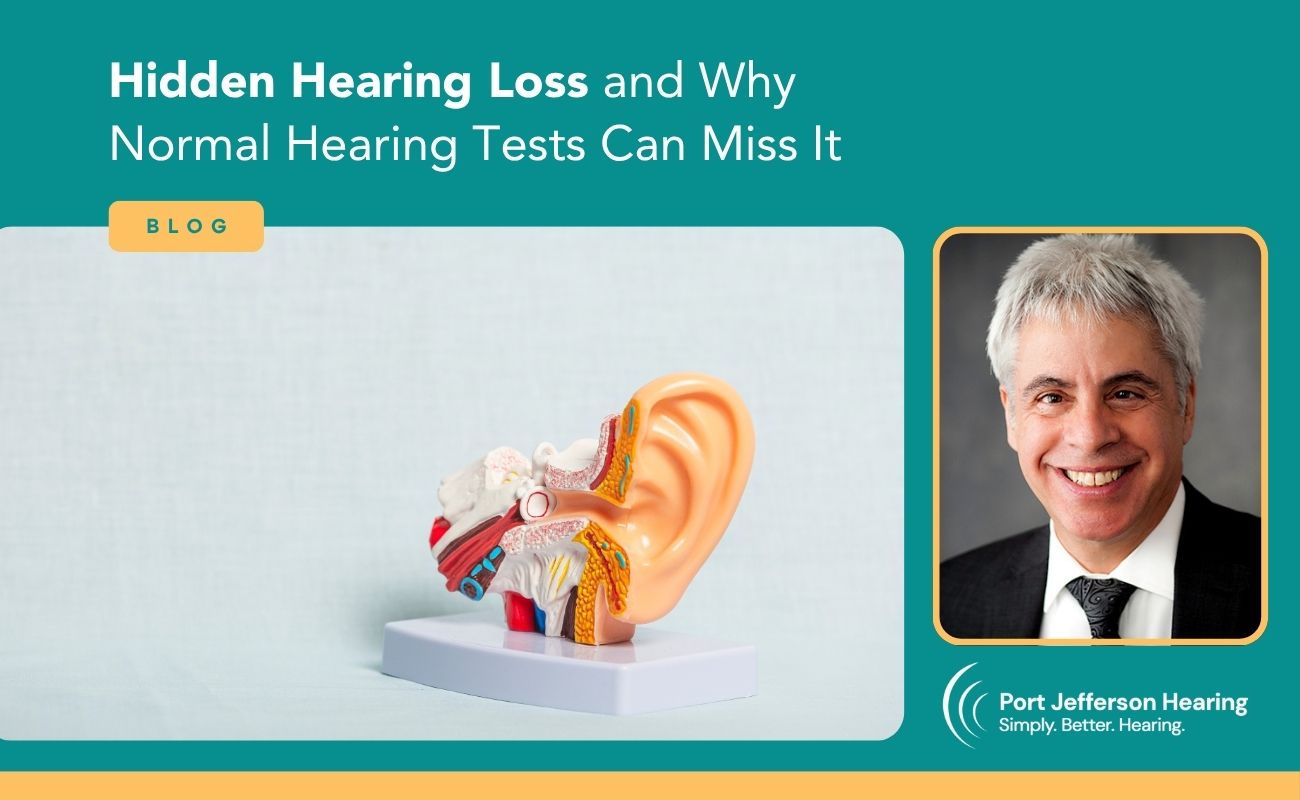
Your audiogram was fine. The audiologist said your hearing is normal. And yet you're asking people to repeat themselves constantly, struggling to follow dinner conversations, and feeling like noisy rooms turn into one big wall of sound you can't cut through.
You're not imagining it.
There's a condition called hidden hearing loss, and it stays hidden specifically because the standard hearing test most people receive isn't designed to catch it.
What the Beep-in-the-Booth Test Actually Tells You
Pure tone audiometry, the familiar beep-in-the-booth test, measures how quiet a sound needs to be before you stop hearing it — and plots the results on a graph called an audiogram.
What it doesn't measure is how well your brain and auditory system make sense of sounds once they arrive. Your ears can pick up tones at perfectly normal levels and still struggle to process speech in a noisy room. The audiogram won't flag that. It measures thresholds, not processing.
That distinction matters more than most people realize.
Why This Happens
Hidden hearing loss usually involves damage to the tiny connections between the hair cells in your inner ear and the auditory nerve. These connections can wear down from years of noise exposure — loud concerts, hunting, factory work, music at high volume — often long before any measurable change shows up on a standard test.
The result is a normal audiogram alongside real, daily struggles. It shows up more often in middle-aged adults than people expect, and it tends to get worse in exactly the situations that matter most: restaurants, family gatherings, meetings with multiple people talking at once.
The Test That Can Actually Find It
At Port Jefferson Hearing, Dr. Martinetti uses speech-in-noise testing as a core part of every comprehensive evaluation — not as an optional add-on.
The main tool is the QuickSIN test. You listen to sentences while background noise gets progressively louder and repeat back what you hear. The results show your signal-to-noise ratio — essentially, how favorable listening conditions need to be before you can reliably understand speech.
It's one of the few tests that mirrors real life. A crowded restaurant, a noisy family dinner, a conference room with side conversations — the QuickSIN is built to approximate those situations. For patients with hidden hearing loss, it's often the first time a test result actually matches what they've been describing for years.
Depending on what the initial results show, Dr. Martinetti may add further speech-in-noise measures to build a more complete picture. The goal is understanding how you hear in the situations that actually affect your daily life.
Why So Many People Never Get This Test
Honestly? Time. A thorough speech-in-noise evaluation takes longer than a quick threshold test. In busy ENT offices, patients often get a basic audiogram and move on. There's nothing wrong with using the audiogram — the problem is stopping there.
Dr. Martinetti has been conducting comprehensive, best-practice hearing evaluations since 1984. That means a full case history, threshold testing, speech understanding at comfortable listening levels, and QuickSIN testing — in a proper test room, with calibrated equipment, interpreted by a Board Certified Audiologist. That combination is what turns a partial picture into a real diagnosis.
What Happens If a Problem Is Found
Finding a speech-in-noise deficit changes how treatment gets approached. Hearing aids, when appropriate, can be programmed specifically for speech clarity in noise rather than just general amplification. Newer platforms from brands like Signia and ReSound perform genuinely well in noisy environments — but programming them accurately requires a precise hearing profile first.
For some patients, auditory training through a program like LACE AI Pro can help the brain get better at processing speech, particularly in noise. It's not a replacement for amplification, but it's a meaningful option for people who want to actively work on what they're hearing.
Ready to Find Out What's Really Going On
If you've been told your hearing is normal but you're still struggling — especially in noise — a more complete evaluation might finally give you answers.
Port Jefferson Hearing serves patients throughout Suffolk County, including Port Jefferson Station, Smithtown, Setauket, and surrounding communities.
Call 631-331-1888 to schedule your appointment, or visit us at Davis Professional Park, 5225 Nesconset Hwy, Building #3, Suite #10, Port Jefferson Station, NY 11776.
We'll take the time to actually find out what's going on.
Discover Our Latest Blogs
Stay informed with our insightful blog posts.
5 Questions Port Jefferson Patients Ask About Tinnitus
Ringing Got Worse This Summer? A Real Treatment Plan for Tinnitus
Why Your Child's Hearing Belongs on the Back-to-School Checklist

Hearing Aid Trials With No Financial Obligation
At Port Jefferson Hearing we believe the only way to know which hearing aid is right for you is to experience the benefits in your day-to-day life. That is why we created a hassle-free, no pressure process that truly puts you in the drivers seat.
