
Board Certified Audiologist vs. Hearing Instrument Specialist: What's the Difference?
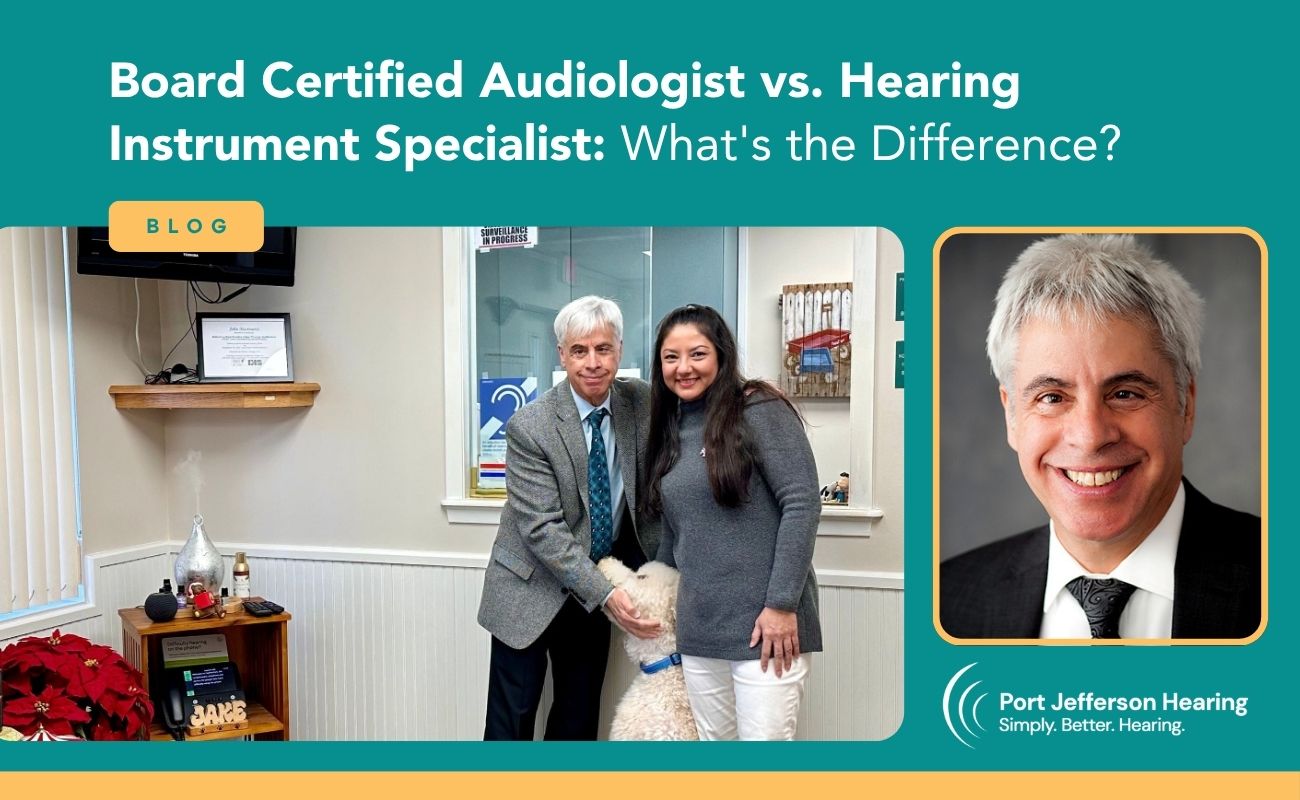
When you start looking into hearing care, you'll likely run into two types of providers: audiologists and hearing instrument specialists. Both can fit you with hearing aids. The similarities mostly end there.
A Hearing Instrument Specialist (HIS) is licensed to test hearing and fit devices. Most states require a licensing exam and a short apprenticeship — no college degree necessary. That's a narrow, device-focused training.
An audiologist holds a doctoral degree. Today's standard is a Doctor of Audiology (Au.D.), a four-year clinical doctorate on top of an undergraduate degree. The curriculum covers hearing anatomy, diagnostics, balance disorders, tinnitus, pediatric audiology, and the neuroscience of how your brain processes sound. It's a comprehensive medical education rather than a product training.
What Board Certification Actually Means
Not every audiologist is board certified, so it's a smart question to ask before booking an appointment.
Board Certification in Audiology is issued by the American Board of Audiology. Earning it requires passing a comprehensive exam. Keeping it requires at least 65 continuing education credits every three years. That's an ongoing commitment, and not a credential you earn once and forget about. A board-certified audiologist is actively required to stay current as technology and research evolve.
Dr. Martinetti at Port Jefferson Hearing is Board Certified in Audiology. He holds an Au.D. from Salus University, two master's degrees in Audiology and Speech-Language Pathology, and dual certifications from the American Speech-Language-Hearing Association: CCC-A and CCC-SLP. He's also a Fellow of the American Academy of Audiology (FAAA), awarded to audiologists who meet strict standards for professional achievement and ethics.
These aren't decorative initials. Each one reflects a specific commitment to training and accountability that directly affects your care.
Why Your Diagnosis Should Come First
Here's something most people don't realize: hearing loss isn't just about volume. If you're thinking "I can hear fine, I just can't follow conversations at dinner", that is actually a clinical finding, not a quirk. Understanding what's behind it matters before anyone recommends a device.
Dr. Martinetti follows best practice diagnostic protocols, which means your evaluation goes beyond a basic tone test. You'll get pure-tone threshold testing to measure how soft sounds need to be before you can detect them, speech understanding testing, and speech-in-noise testing using a validated tool called the QuickSIN. That last one is especially important because difficulty understanding words in noisy environments is the most common complaint patients walk in with.
A hearing instrument specialist can match you with a hearing aid. An audiologist with this level of training can explain *why* you're struggling, identify the type and degree of your hearing loss, flag any medical factors that need attention, and then build a solution around your actual lifestyle.
Finding the Right Fit Takes Time
Getting hearing aids isn't a one-visit transaction. The real work happens after the fitting.
At Port Jefferson Hearing, you're encouraged to try hearing aids in the environments that actually matter to you: your kitchen, your office, a crowded restaurant. Before you make any financial commitment. That kind of trial requires a provider who can adjust programming based on real-world feedback and interpret what you're experiencing. It's a back-and-forth process, not a handoff.
That takes clinical knowledge. Dr. Martinetti has been doing exactly this since 1984 — nearly four decades of fitting, adjusting, and troubleshooting hearing aids for people in this community.
Common Questions Patients Ask
- Do I need a referral to see an audiologist? No. You can schedule directly.
- Is an audiologist more expensive than a hearing instrument specialist? The evaluation may differ in scope, but the investment reflects the thoroughness of the diagnostic process — and getting the right answer the first time typically saves money and frustration in the long run.
- What if I'm not sure I even have hearing loss? That's exactly the right time to come in. An evaluation can tell you whether there's something to address, and if so, how significant it is.
Schedule Your Evaluation in Port Jefferson
If you're noticing changes in your hearing or someone close to you has pointed it out, starting with a Board Certified Audiologist is the right first step. The evaluation is more thorough, the fitting process is more precise, and you'll have an experienced clinician in your corner throughout.
Port Jefferson Hearing is located at Davis Professional Park, 5225 Nesconset Hwy, Building #3, Suite #10, Port Jefferson Station, NY 11776.
Call 631-331-1888 to schedule a comprehensive hearing evaluation with Dr. Martinetti. No pressure — just honest, experienced care.
Discover Our Latest Blogs
Stay informed with our insightful blog posts.
Why Your Child's Hearing Belongs on the Back-to-School Checklist
Hearing Loss at Work: Your Rights Under New York Law

How to Spot Hearing Aid Scams

Hearing Aid Trials With No Financial Obligation
At Port Jefferson Hearing we believe the only way to know which hearing aid is right for you is to experience the benefits in your day-to-day life. That is why we created a hassle-free, no pressure process that truly puts you in the drivers seat.
